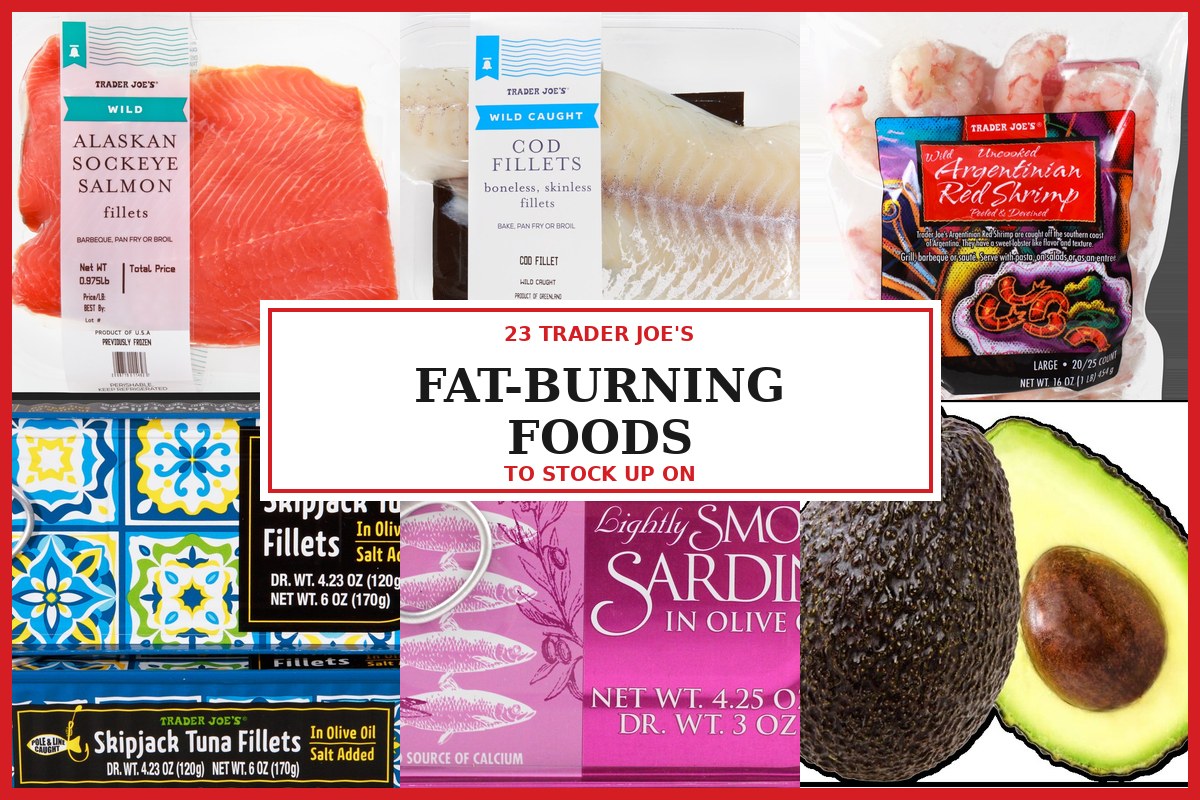
“Fat-burning foods” really means smart whole foods that support fullness, energy, and metabolism through protein, fiber, and nutrient density. Nothing here is magic or a guaranteed weight-loss fix, but these Trader Joe’s picks can help build a higher-protein, higher-fiber cart. Use this as a shopping guide—not a diet plan—and check with a professional if you’re managing a medical condition.
How These Foods Actually Work
These foods work in three simple ways: protein takes more energy to digest, fiber-rich foods help you feel full longer, and slow-digesting carbs like oats and quinoa support steadier energy and fewer cravings than refined grains.
A Note Before You Stock Up
No single food burns fat on its own — that’s not how nutrition works. These are, however, the foods most consistently associated with sustainable weight management in long-term research. Treat this as a list of pantry staples to stock more of, not a list of foods that will deliver specific medical outcomes. Talk to your doctor about any specific health concern.
1. Organic Free Range Boneless Skinless Chicken Breasts
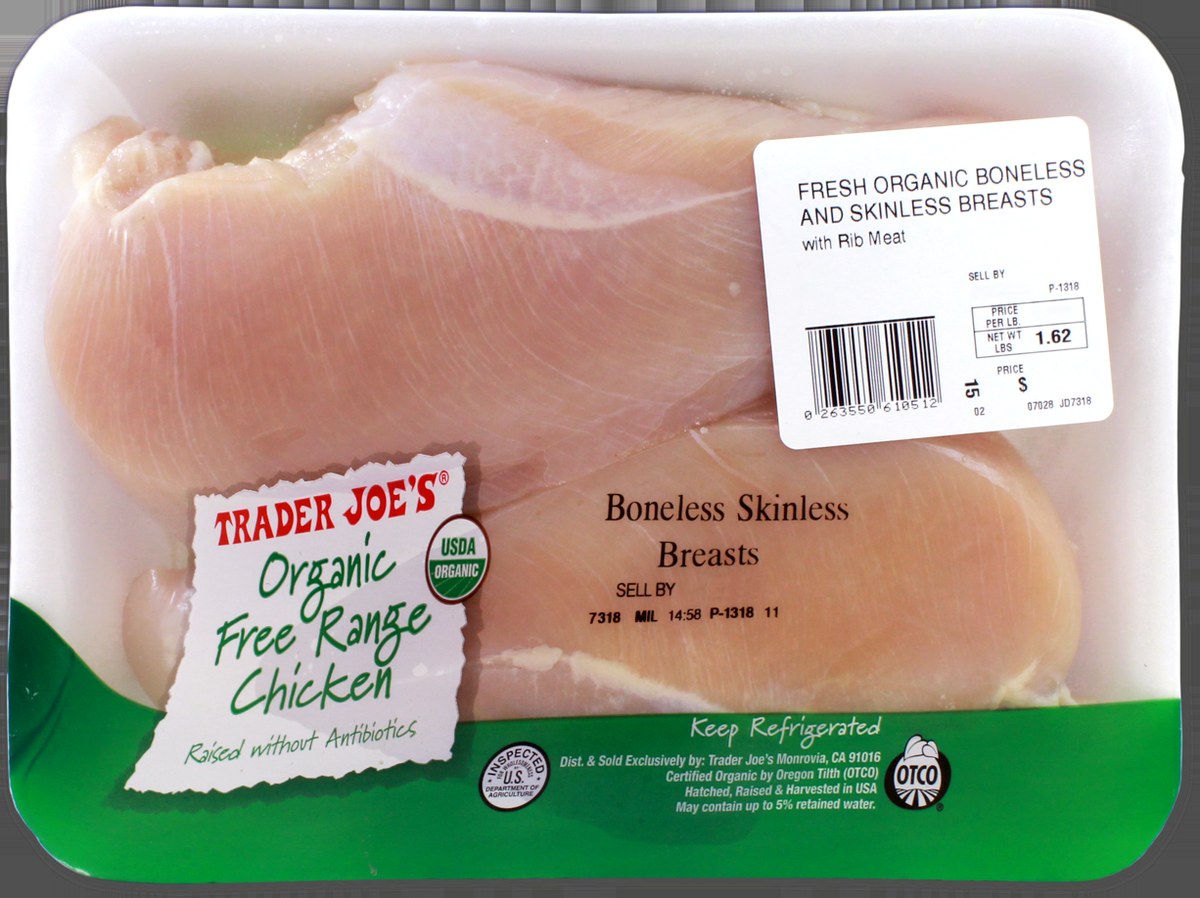
Plain skinless chicken breast is the most flexible lean-protein anchor in any cart. Two breasts cooked Sunday cover three lunches and a dinner without effort. Organic free-range adds about a dollar a pound and is one of the few clear-quality upgrades on the meat aisle.
Why It Earns a Spot
Skinless chicken breast is one of the most protein-dense foods in the freezer — roughly 26 grams of protein per 4-ounce cooked serving and almost no fat. High-protein meals have a higher thermic effect than carb-heavy meals (your body burns more calories digesting protein), and they’re associated with better appetite control.
Best Ways to Eat It
- Sheet-pan dinner: roast with broccoli, sweet potato cubes, and olive oil at 425 for 25 minutes.
- Lunch prep: poach in salted water, shred, and toss with the bagged baby spinach below for a fast salad base.
- Wrap or bowl: slice over a brown-rice bowl with sauerkraut and avocado.
Final Verdict
A weekly cart staple. Buy two packs, freeze one, and you’ve covered protein for the week.
2. Wild Alaskan Sockeye Salmon Fillets
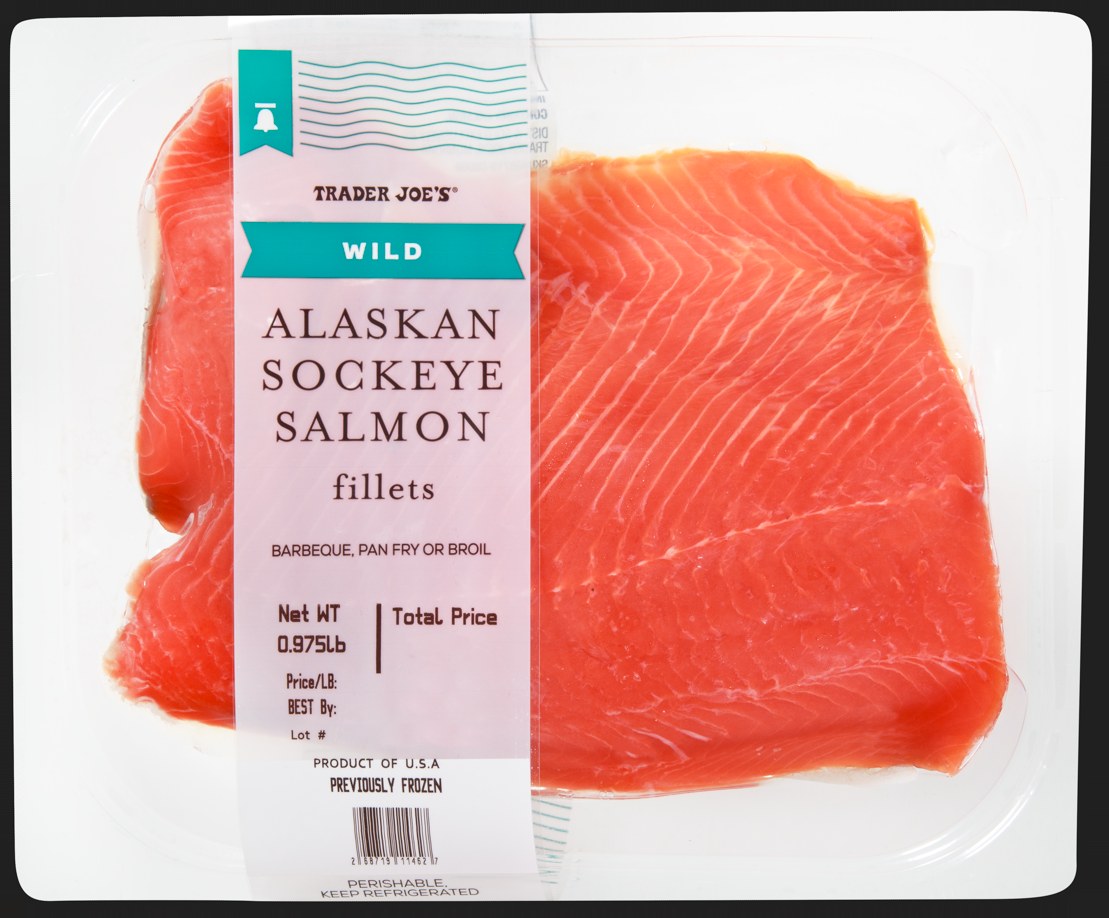
Trader Joe’s frozen wild salmon fillets come individually vacuum-sealed, so you can pull one out at a time without thawing the whole bag. The wild label matters here — wild salmon delivers a different omega-3 profile than farmed, and the cleaner flavor stands up to lemon and herbs without needing a heavy sauce.
Why It Earns a Spot
Wild salmon is the gold standard for omega-3 fatty acids — about 1.5 grams of EPA and DHA per 4-ounce fillet. Omega-3s are associated with reduced inflammation and may support healthy body-composition over time. Salmon also delivers 23 grams of protein per fillet, hitting the satiety lever hard.
Best Ways to Eat It
- Quick weeknight bake: skin-down on parchment, brush with olive oil and lemon, 12 minutes at 400.
- Salad topper: flake leftovers over Tuscan kale with avocado and a splash of vinegar.
- Breakfast hash: fold flaked salmon into scrambled eggs with a handful of spinach.
Final Verdict
Worth the freezer space. Keep two fillets stocked at all times.
3. Wild Caught Cod Fillets
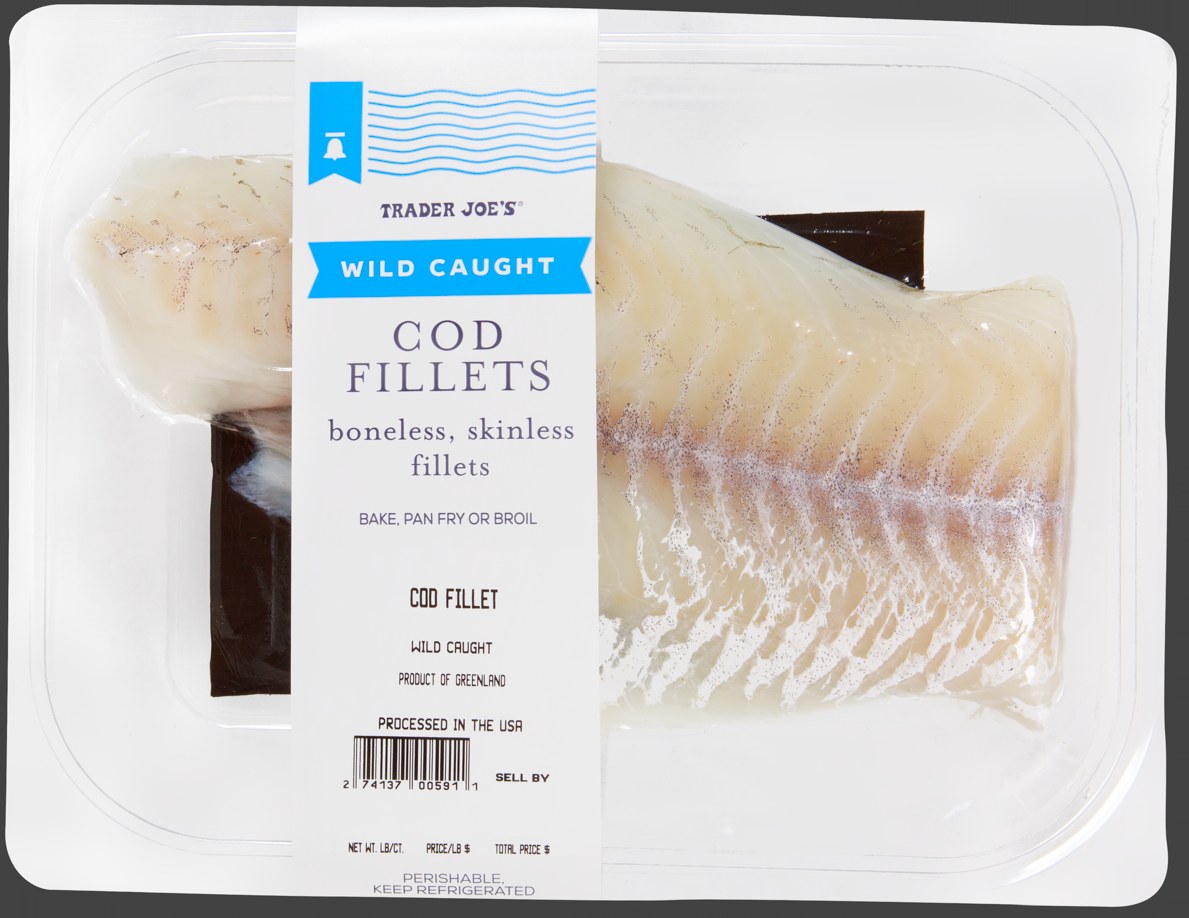
Wild-caught cod fillets are the budget-friendly counterpart to salmon — mild, white, and ready to take on whatever spice rub you put on them. Frozen flat in individual portions, they thaw in about 20 minutes under cold water. Perfect for weeknights when you want fish without the salmon price tag.
Why It Earns a Spot
Cod is the lean-fish workhorse: roughly 20 grams of protein and only 90 calories per 4-ounce fillet, with almost zero fat. For shoppers who want salmon’s protein hit without the calorie load, cod is the answer. It also takes on whatever seasoning you throw at it.
Best Ways to Eat It
- Pan-seared: high heat, olive oil, salt, lemon — 3 minutes per side.
- Fish tacos: flake into corn tortillas with shredded cabbage and a squeeze of lime.
- Foil-pack: cod, jalapeno slices, cherry tomato, ginger — 18 minutes at 400.
Final Verdict
An underrated freezer staple. Cheaper than salmon and just as filling.
4. Wild Raw Argentinian Red Shrimp
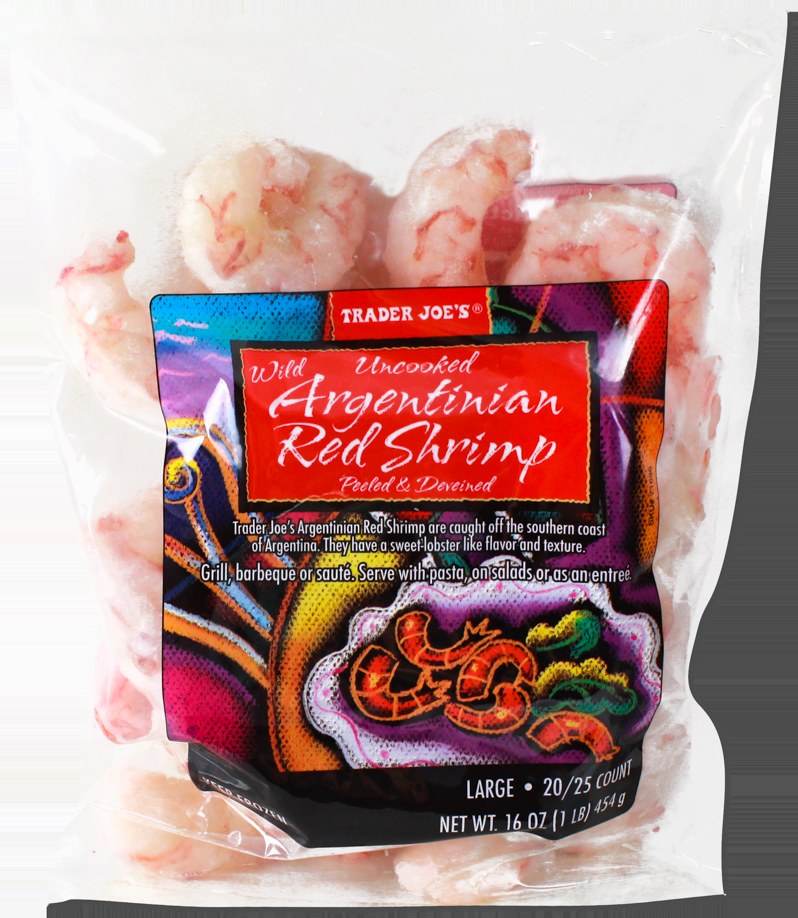
These bright pink Argentinian shrimp cook in three minutes flat, making them the fastest weeknight protein in the entire freezer aisle. The wild-caught label is worth paying attention to here — these are not farmed shrimp. The flavor leans naturally sweet, which means even a simple olive-oil-and-garlic preparation tastes like restaurant food.
Why It Earns a Spot
Argentinian red shrimp deliver 24 grams of protein per 4-ounce serving with under 1 gram of fat, putting them in the same satiety class as chicken breast. They thaw in five minutes under cold water, making them the fastest weeknight protein in the freezer.
Best Ways to Eat It
- Garlic-shrimp skillet: olive oil, garlic, jalapeno — 3 minutes.
- Shrimp + quinoa bowl: over the tricolor quinoa below with avocado and lime.
- Sheet-pan with brussels sprouts: everything on one tray, 18 minutes at 425.
Final Verdict
Buy two bags. The fastest protein in the store.
5. Skipjack Tuna Fillets in Olive Oil
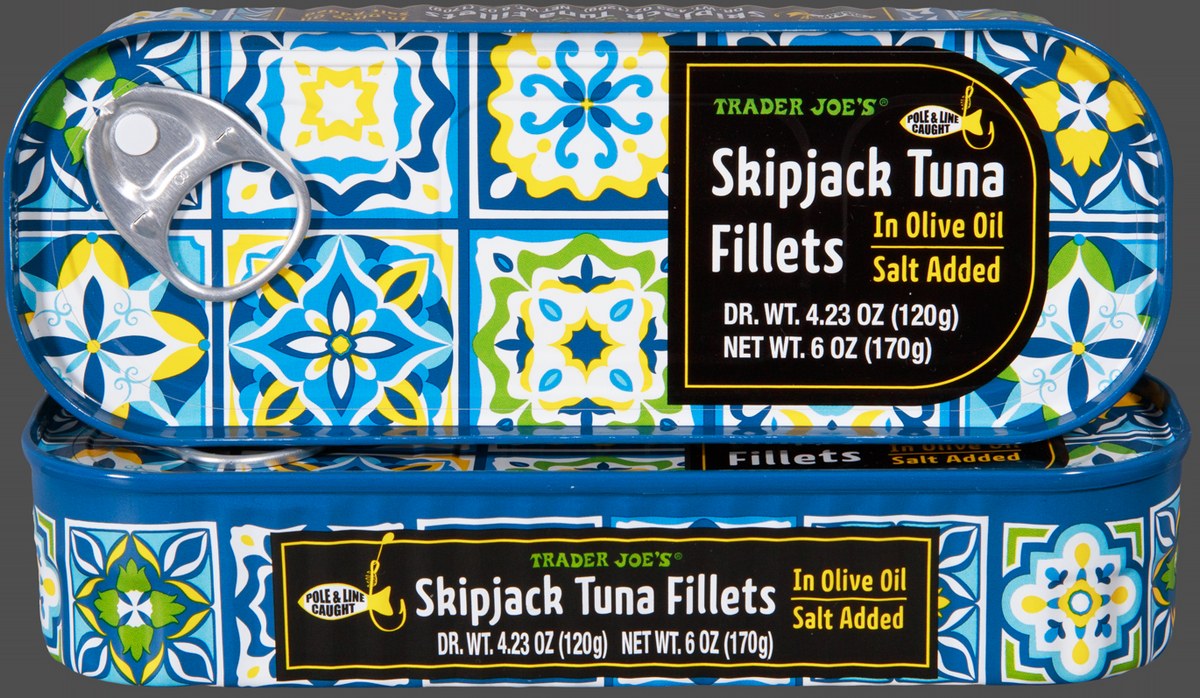
Canned tuna packed in olive oil is the pantry insurance every kitchen needs. Trader Joe’s skipjack version runs about $2.99 a can, which puts it in the cheapest-protein-in-the-store category. Drain lightly to preserve some of the healthy fat, and you have lunch in under two minutes.
Why It Earns a Spot
Skipjack in olive oil hits 22 grams of protein per can — pantry insurance for any week when you didn’t cook. The olive-oil pack adds healthy monounsaturated fats that may support satiety better than the water-packed version. No prep, no cleanup.
Best Ways to Eat It
- Tuna over greens: drain lightly, fork over baby spinach with lemon.
- Mediterranean bowl: tuna, garbanzo beans, cherry tomato, olives.
- Stuffed avocado: scoop a Hass avocado, fill with tuna and a squeeze of lemon.
Final Verdict
Stock four cans. Cheapest protein per gram in the store.
6. Lightly Smoked Sardines in Olive Oil
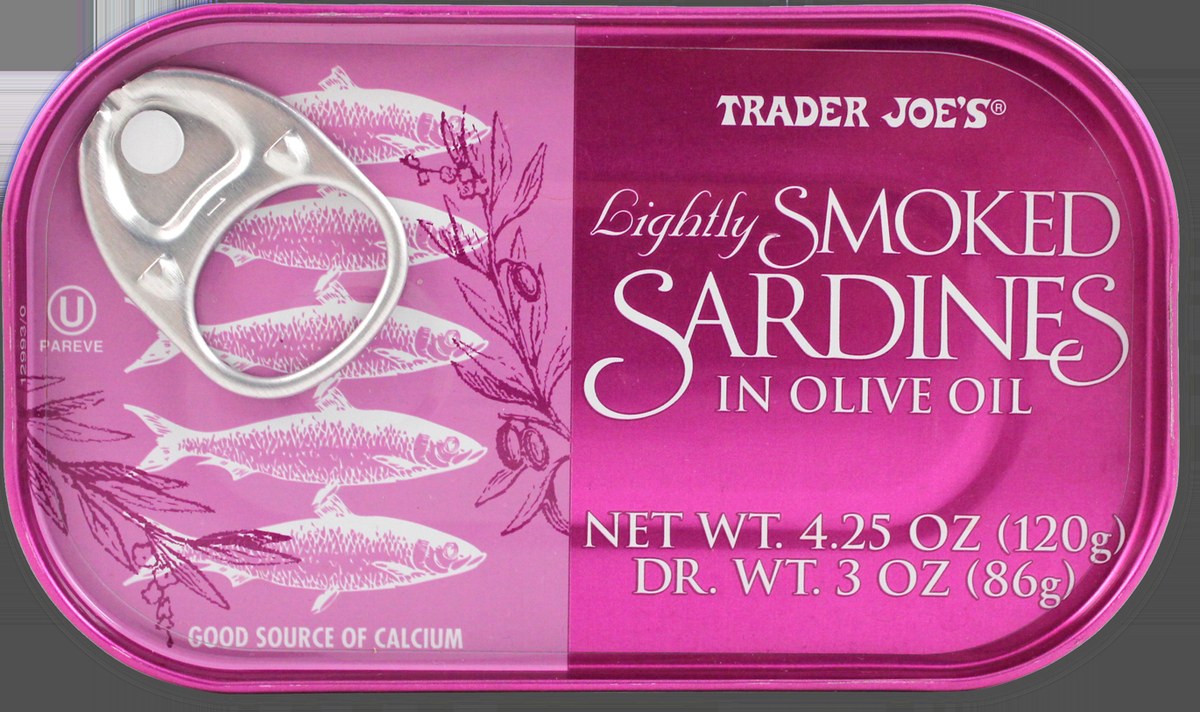
Trader Joe’s lightly smoked sardines pack the same omega-3 punch as salmon at a fraction of the price — and they’re shelf-stable, which means they’re always there for the weeks you didn’t make it to the store. The smoke is gentle, not overpowering, which makes them an easier introduction for shoppers new to canned fish.
Why It Earns a Spot
Sardines pack the same omega-3 punch as salmon at a fraction of the price — roughly 1 gram of omega-3s and 22 grams of protein per tin. They’re also one of the few foods naturally rich in vitamin D and calcium (the soft bones are edible). Longtime shoppers reach for these as a pantry omega-3 fallback.
Best Ways to Eat It
- On sprouted toast: smash with a fork, top with sliced avocado and pepper.
- Quick Mediterranean snack: straight from the tin with whole-grain crackers and tomato.
- Fold into pasta: warm with garlic and olive oil, toss with whole-grain pasta.
Final Verdict
A pantry omega-3 hedge. Keep three tins on the shelf.
7. Ground Turkey
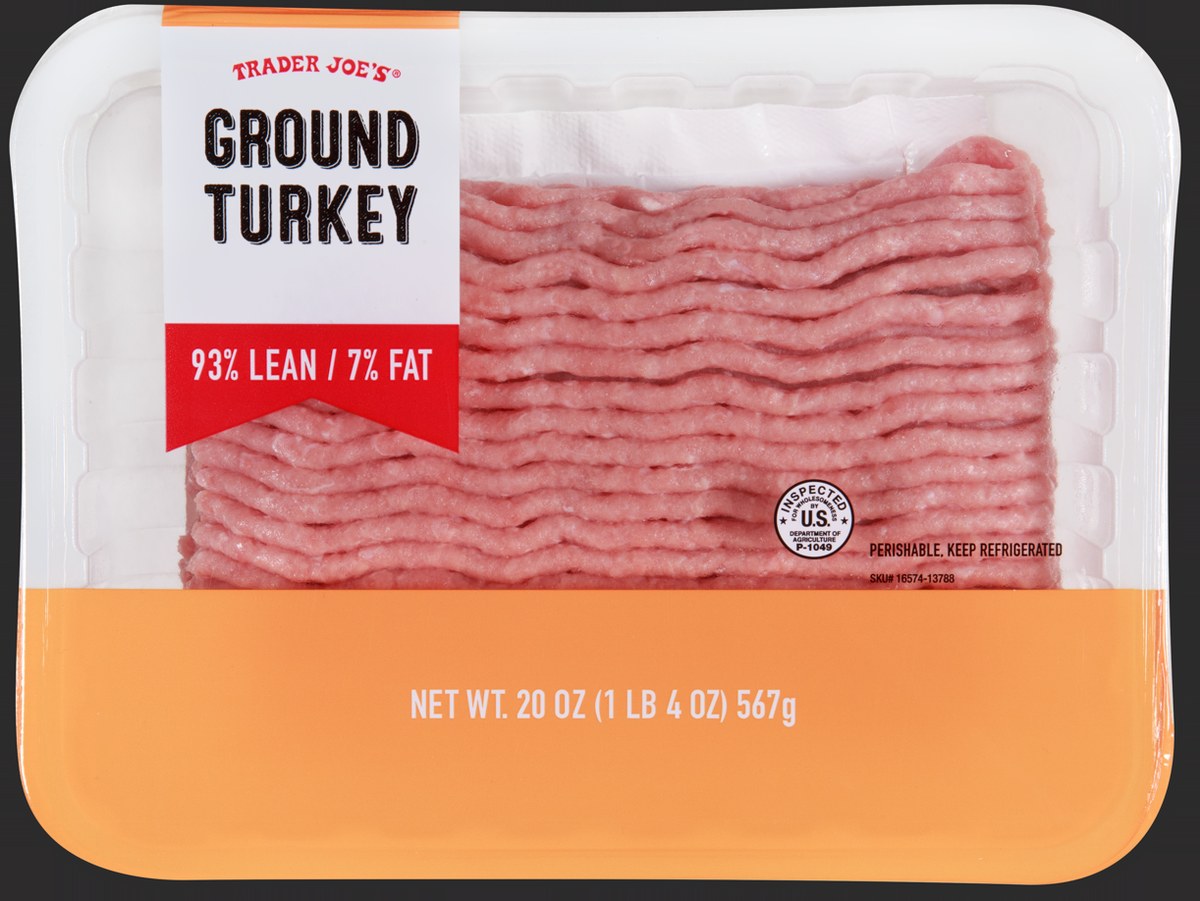
Ground turkey is the meal-prep workhorse — swap it anywhere a recipe calls for ground beef and you cut calories and saturated fat without losing the protein. Trader Joe’s version runs lean enough for any application but still has enough fat to brown properly without sticking. A one-pound package portions out to four servings of about 22 grams of protein each.
Why It Earns a Spot
Lean ground turkey runs roughly 22 grams of protein and 8 grams of fat per 4-ounce cooked serving. It’s the meal-prep workhorse — swap it anywhere a recipe calls for ground beef and you’ll cut calories by about a third with no loss in protein.
Best Ways to Eat It
- Turkey taco bowls: browned with cumin, served over brown rice with black beans.
- Turkey meatballs: mix with one egg, baked at 400 for 15 minutes.
- Lettuce-cup wraps: browned with ginger and garlic, scooped into butter lettuce.
Final Verdict
Buy two pounds, freeze half. The most versatile lean protein in the store.
8. Organic Firm Tofu
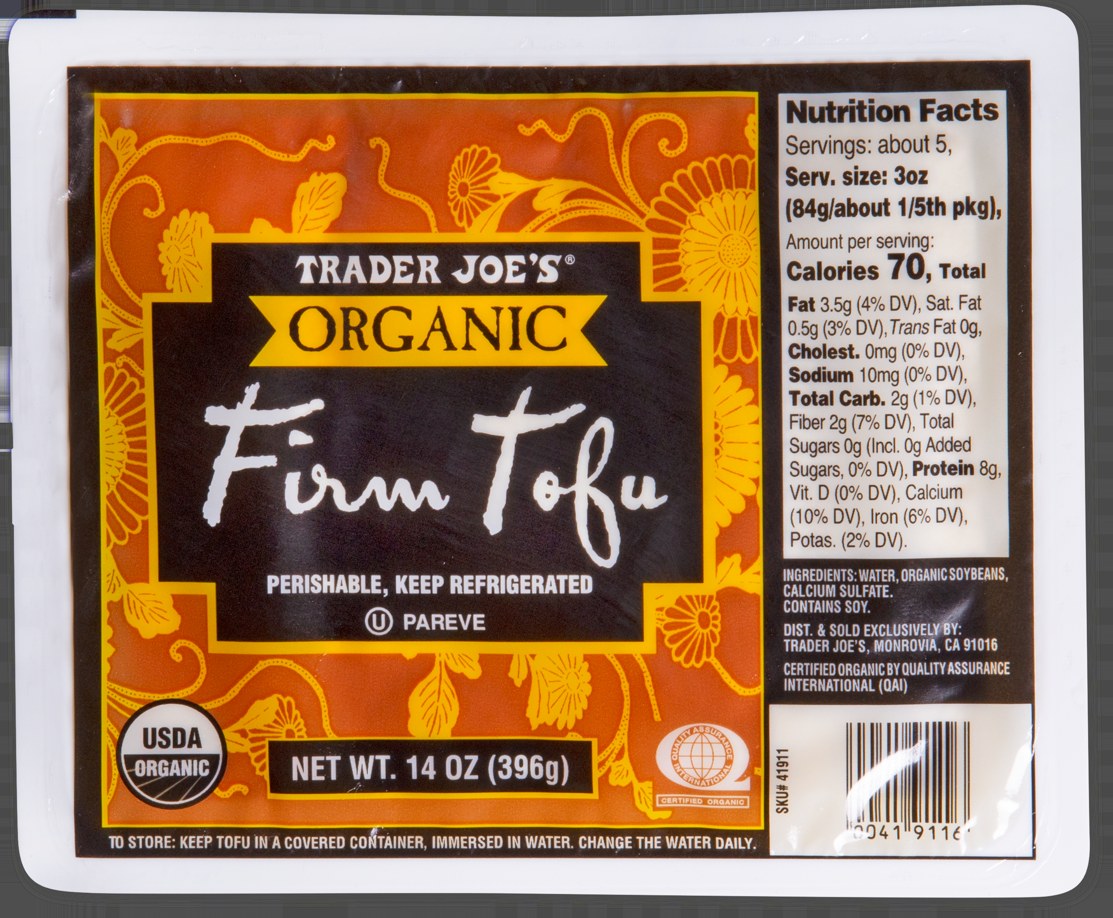
Press the block between paper towels for 15 minutes before you cook it and firm tofu transforms from soft and bland to chewy and absorbent. The organic certification matters here because the soybeans are non-GMO. At about $2.49 a block, it’s one of the cheapest complete proteins in the store.
Why It Earns a Spot
Firm tofu delivers about 10 grams of plant protein per half-cup with very little saturated fat. It’s a complete protein, meaning it contains all nine essential amino acids — a useful fact for shoppers who eat less meat. Press it between paper towels for 15 minutes before cooking and the texture transforms.
Best Ways to Eat It
- Crispy baked cubes: toss with olive oil and tamari, 425 for 25 minutes.
- Scrambled tofu breakfast: crumble with turmeric and spinach for an egg-free start.
- Quick stir-fry: pan-fry with broccoli, ginger, and a splash of soy.
Final Verdict
An affordable plant-protein staple. Keep two blocks in the fridge.
9. Greek Nonfat Yogurt Plain
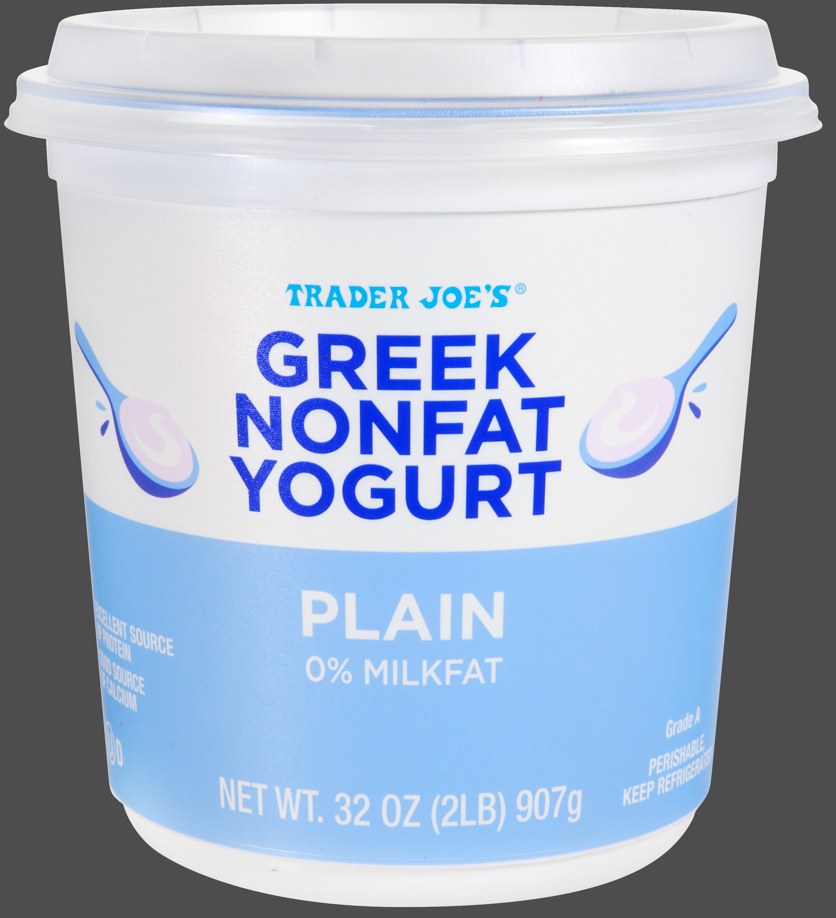
Trader Joe’s plain nonfat Greek yogurt — the 32-ounce tub, not the single-serve cups — is the single best price-per-gram-of-protein in the dairy aisle. It’s intentionally tangy, which means it works equally well as a breakfast base with berries or as a savory dip with herbs and lemon. One tub typically lasts a week of breakfasts.
Why It Earns a Spot
A single cup of nonfat plain Greek yogurt delivers about 17 grams of protein, 10 percent of your daily calcium, and live probiotic cultures that may support gut health. The high protein-to-calorie ratio is what makes it a staple in nearly every dietitian-recommended breakfast.
Best Ways to Eat It
- Berry parfait: top with raw almonds, a drizzle of honey, and frozen blueberries.
- Savory dip: stir in lemon, dill, and cucumber for a veggie-tray dip.
- Smoothie base: blend with frozen banana, baby spinach, and a tablespoon of almond butter.
Final Verdict
The single best breakfast protein in the store. Keep a tub on hand at all times.
10. Honeycrisp Apples
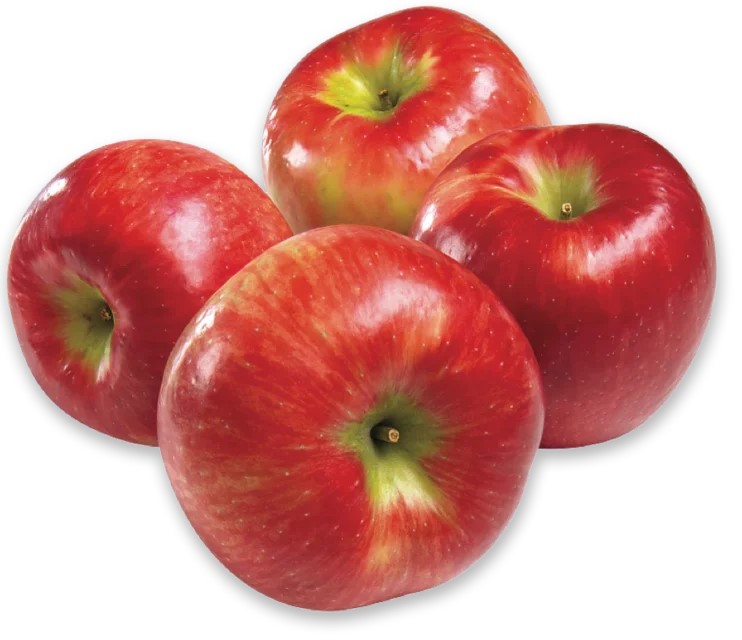
Apples are the original pre-portioned snack: high in fiber, low in calories, and they travel in any bag without bruising. Honeycrisp leans sweet-crisp, Granny Smith leans tart, and either one rounds out a snack pairing with almonds or almond butter beautifully. A bag of six runs about $3.99 and lasts the whole week.
Why It Earns a Spot
A medium apple delivers about 4 grams of fiber for under 100 calories — much of it pectin, which slows digestion and may support steady blood sugar. The fiber-plus-water density is why an apple is one of the most satiating snacks for the calories.
Best Ways to Eat It
- Apple + almond butter: two tablespoons of almond butter turns this into a real snack.
- Apple salad add-in: diced into a kale salad for crunch.
- Baked oatmeal: fold chopped apple into rolled oats with cinnamon.
Final Verdict
Always in the fruit bowl. Affordable, portable, and high-fiber.
11. Hass Avocado
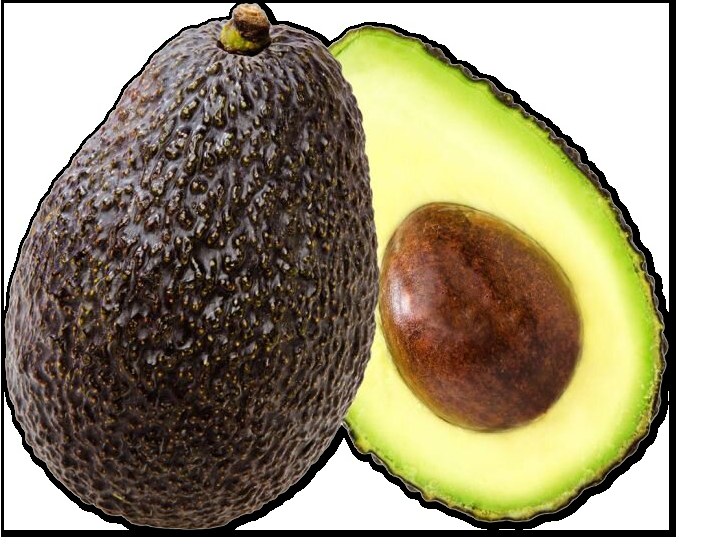
A Hass avocado is roughly 240 calories of mostly heart-healthy fat plus 10 grams of fiber per fruit. Trader Joe’s sells them individually so you can pick exactly the ripeness you want — firm for two days out, slightly yielding for tonight’s smashed-avocado toast. The pre-bagged four-pack works if you’re using them throughout the week.
Why It Earns a Spot
Half a Hass avocado has about 5 grams of fiber and 10 grams of monounsaturated fat — the type of fat associated with healthier cholesterol numbers and longer-lasting satiety. The combination of fiber and healthy fat is what makes half an avocado at breakfast keep hunger at bay until lunch.
Best Ways to Eat It
- Smashed on sprouted toast: with salt, pepper, and lemon.
- Stuffed with tuna: halved avocado, scoop, fill with canned tuna.
- Salad add: diced over kale with chickpeas and a vinaigrette.
Final Verdict
Buy a bag of four every shop. Use within five days.
12. Organic Baby Spinach
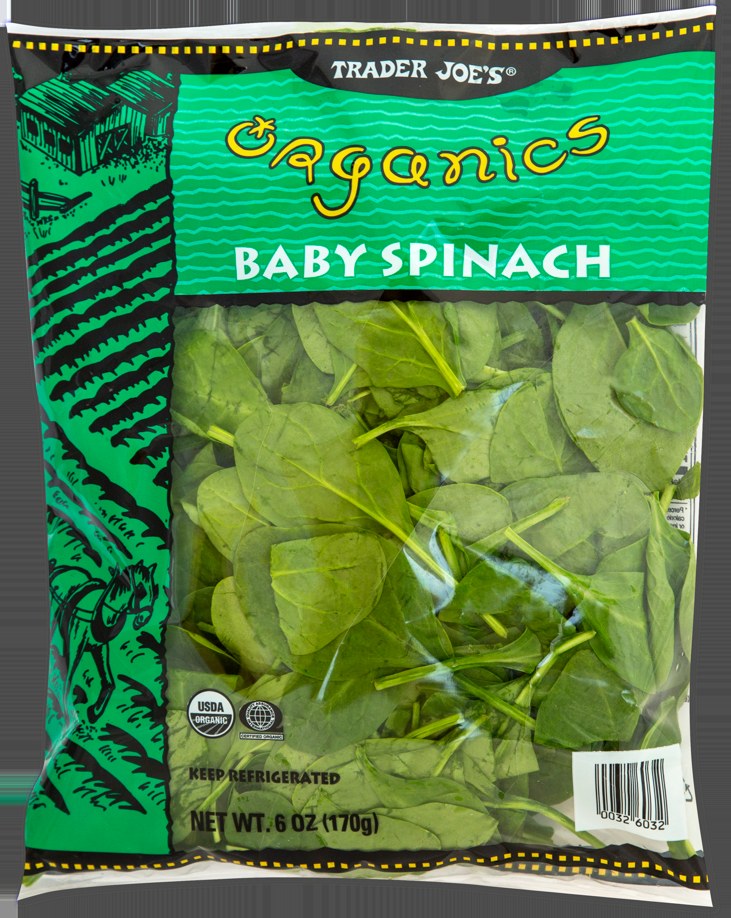
A pre-washed bag of organic baby spinach is the easiest way to add volume to any meal — eggs, sandwiches, soups, smoothies all welcome a handful or two. The clamshell stays fresh about eight days in the crisper. Tender enough to eat raw, hardy enough to wilt into anything warm.
Why It Earns a Spot
A bagged 5-ounce clamshell is roughly four servings of leafy greens at about 7 calories per cup. Spinach is rich in magnesium and iron, and the high-fiber-low-calorie ratio makes it easy to add volume to any meal without adding much energy intake.
Best Ways to Eat It
- Wilt into eggs: two handfuls into scrambled eggs for a fast green breakfast.
- Pile under any protein: spread on the plate, top with salmon or chicken — instant salad base.
- Smoothie blend: two cups blend invisible into a yogurt-berry smoothie.
Final Verdict
Buy two bags weekly. Spinach is the easiest volume add in the store.
13. Organic Tuscan Kale
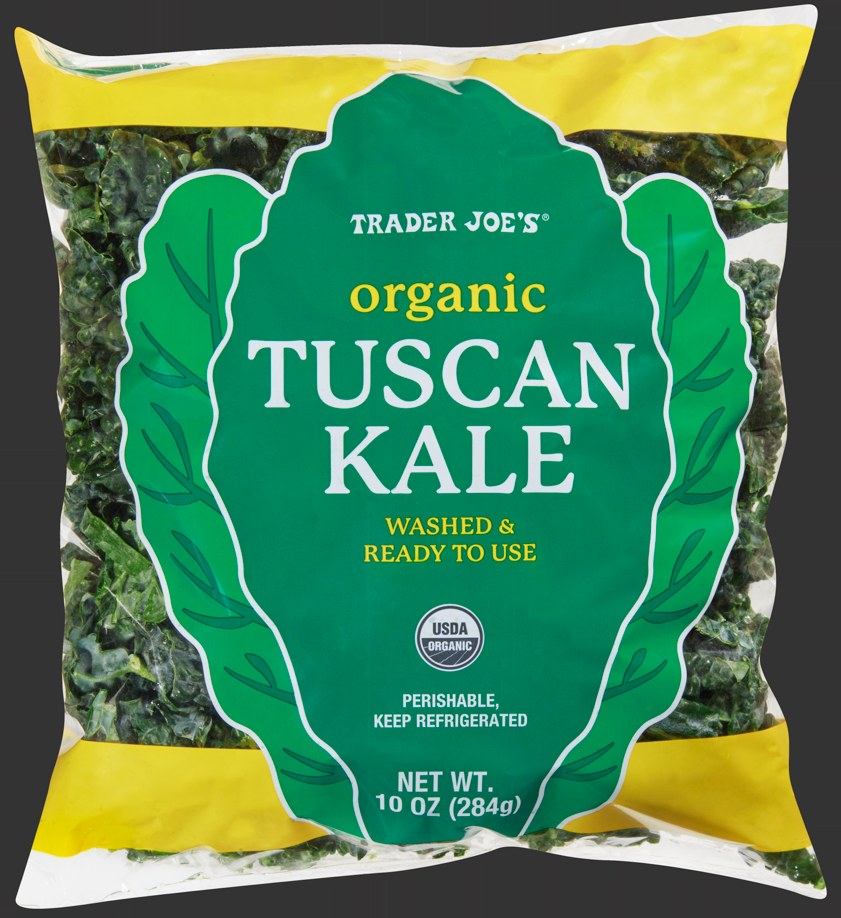
Tuscan kale (the dark, dimpled-leaf variety) is sturdier and less bitter than curly kale, which is why it shows up in restaurant salads. Strip the leaves off the tough stems, give them a 60-second massage with olive oil, and you have a kale salad that holds up overnight in the fridge — unlike spinach, which wilts immediately.
Why It Earns a Spot
Tuscan kale delivers about 3 grams of fiber per cup and is one of the most nutrient-dense vegetables sold — vitamin K, vitamin C, and calcium per calorie. The sturdier leaves hold up to a vinaigrette overnight without wilting, making it the better meal-prep green.
Best Ways to Eat It
- Massaged kale salad: remove stems, rub leaves with olive oil and salt — softens in 60 seconds.
- Crispy roasted kale: tear, toss with olive oil, 350 for 12 minutes.
- Soup add: stir torn leaves into the lentil soup below for the last 5 minutes.
Final Verdict
Buy one bunch weekly. Holds up longer than spinach in the fridge.
14. Brussels Sprouts
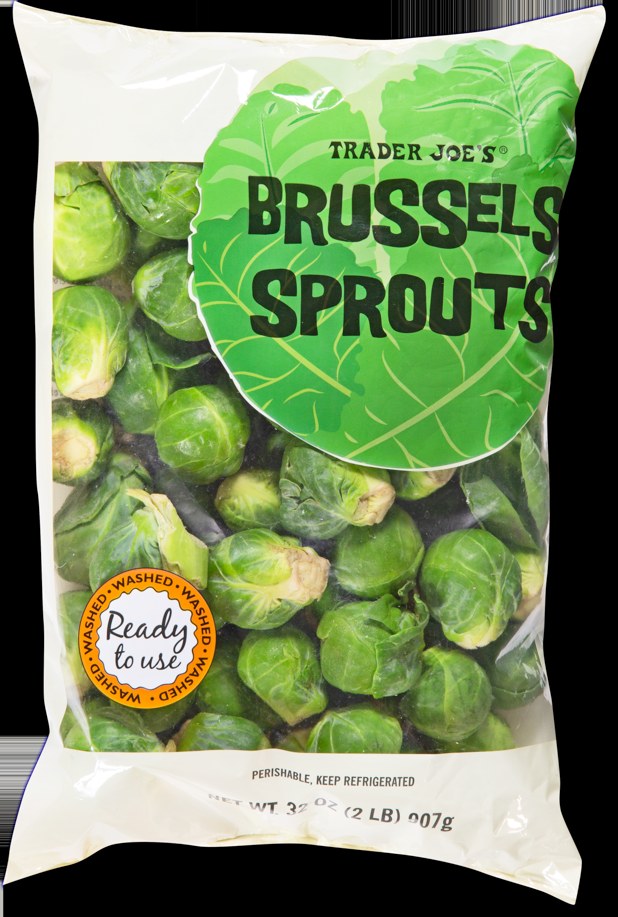
Brussels sprouts have made the long climb from school-cafeteria nightmare to dinner-party star, and roasting them at 425 with olive oil is the reason why. Trader Joe’s pound bag is convenient, but the loose ones from the produce wall are usually fresher. Look for tight, bright-green heads.
Why It Earns a Spot
Brussels sprouts run about 4 grams of fiber per cup and are a cruciferous vegetable — a category associated with broad nutritional benefits including support for liver-detox pathways. Roasted, they have a built-in sweetness that makes them one of the few green vegetables shoppers genuinely want seconds of.
Best Ways to Eat It
- Roasted with balsamic: halved, tossed with olive oil, 425 for 25 minutes.
- Shaved raw salad: thinly sliced with apple and almonds, dressed with lemon.
- Pan-crisped: halved, cut-side down in olive oil — caramelize 5 minutes.
Final Verdict
Buy a pound bag weekly. Roasted brussels turn skeptics into believers.
15. Organic Tricolor Quinoa
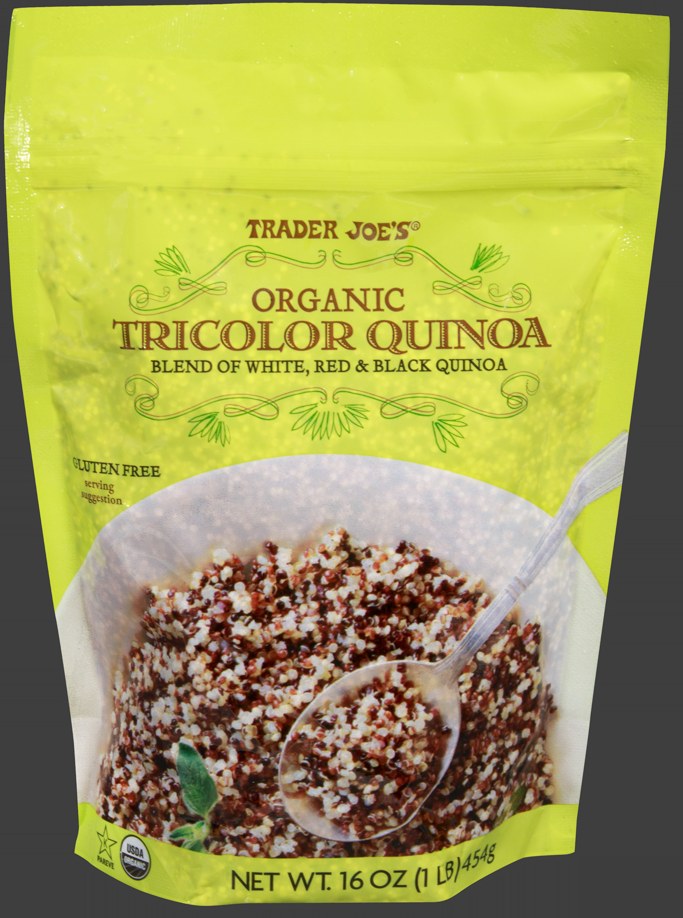
Tri-color quinoa cooks in 15 minutes and delivers 8 grams of complete protein per cup — meaning it contains all nine essential amino acids, which is rare for a grain. Trader Joe’s organic version is competitively priced compared to natural-foods stores. Make a double batch on Sunday and it carries you through three weekday lunches.
Why It Earns a Spot
Quinoa is one of the few grains that is also a complete protein — about 8 grams of protein and 5 grams of fiber per cooked cup. It cooks in 15 minutes and holds up cold in the fridge for four days, making it the meal-prep grain of choice over white rice.
Best Ways to Eat It
- Quinoa breakfast bowl: with berries, almonds, and a drizzle of maple.
- Mediterranean grain bowl: with garbanzo beans, cucumber, tomato, lemon.
- Stuffed peppers: cooked quinoa + ground turkey, baked in halved bell peppers.
Final Verdict
Replace white rice with this for one week. The protein difference adds up.
16. Gluten Free Organic Rolled Oats with Ancient Grains & Seeds
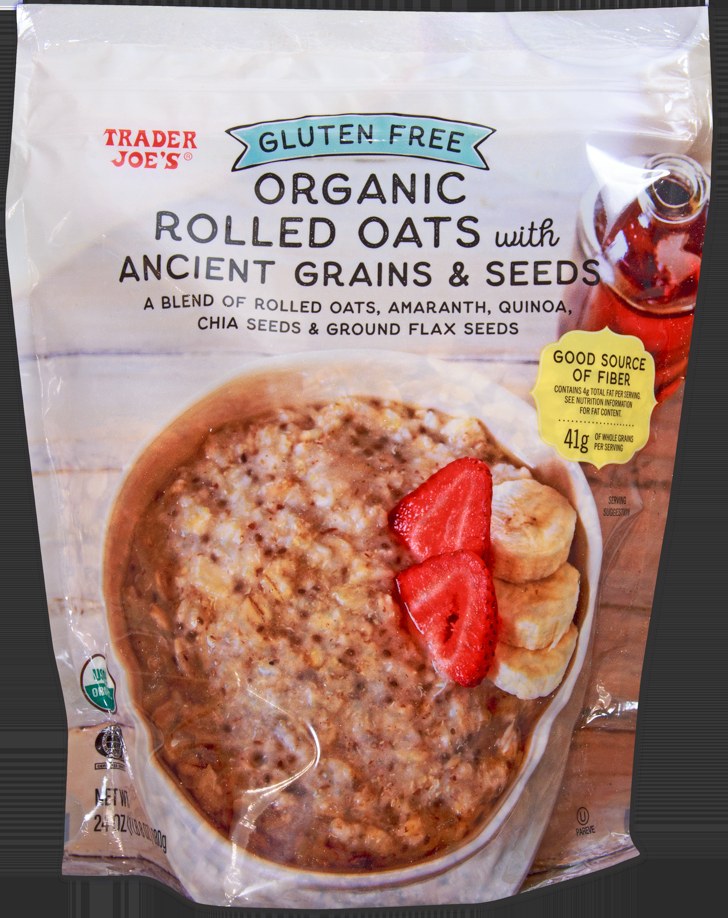
Rolled oats are the most flexible breakfast carbohydrate in the store — overnight oats, hot oatmeal, baked oats, savory oat bowls all start with the same bag. Trader Joe’s organic version with ancient grains and seeds adds a small protein boost over plain oats. A bag runs about $4.99 and lasts roughly a month of breakfasts.
Why It Earns a Spot
Oats are one of the most-studied whole grains for satiety — the soluble fiber called beta-glucan forms a gel in your stomach that slows digestion and is associated with healthier cholesterol numbers. A half-cup dry serving delivers about 4 grams of fiber and 5 grams of protein.
Best Ways to Eat It
- Overnight oats: half-cup oats + plain yogurt + frozen berries — refrigerate overnight.
- Hot oats with seeds: cooked with hemp seeds and cinnamon.
- Savory oat bowl: cooked plain, topped with a soft egg and wilted spinach.
Final Verdict
The cheapest, most flexible breakfast in the store. Keep two bags on the shelf.
17. Steamed Lentils
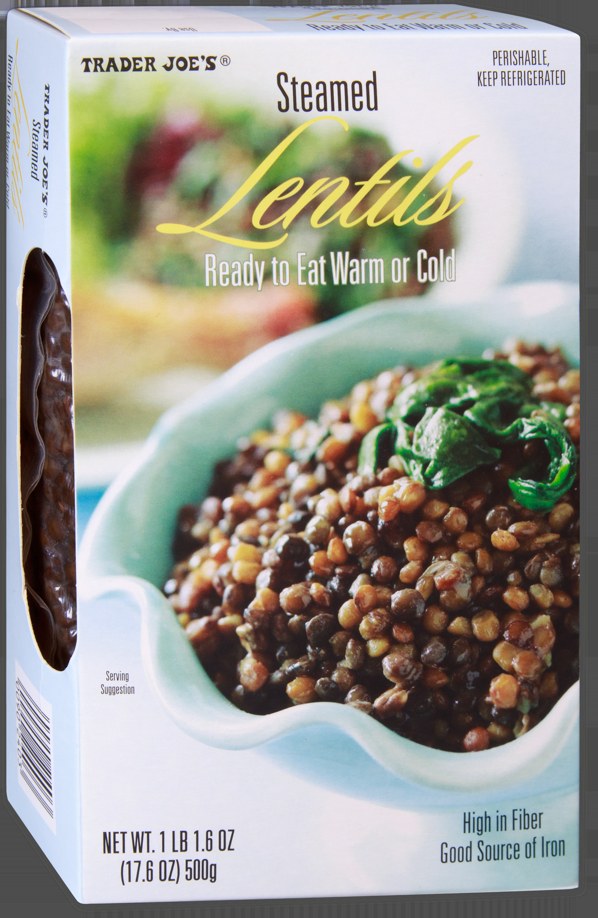
Pre-steamed lentils in a vacuum pouch are the fastest plant-based protein in the store — open the pouch, dump on a plate, and you have dinner. They’re already cooked, so there’s no boiling, no simmering, no babysitting a pot. Toss with olive oil and lemon and you have a complete side in 60 seconds.
Why It Earns a Spot
Steamed lentils pack about 9 grams of protein and 8 grams of fiber per cup — among the highest fiber-to-calorie ratios in the legume aisle. The combination is what makes lentils one of the most filling foods for the calories. They’re ready to eat straight from the pouch.
Best Ways to Eat It
- Lentil salad: tossed with olive oil, lemon, parsley, diced apple.
- Warm bowl: heated with cumin and a handful of spinach.
- Hearty soup base: into broth with carrots, kale, and turkey meatballs.
Final Verdict
Keep two pouches in the pantry. The fastest plant protein in the store.
18. Organic Black Beans
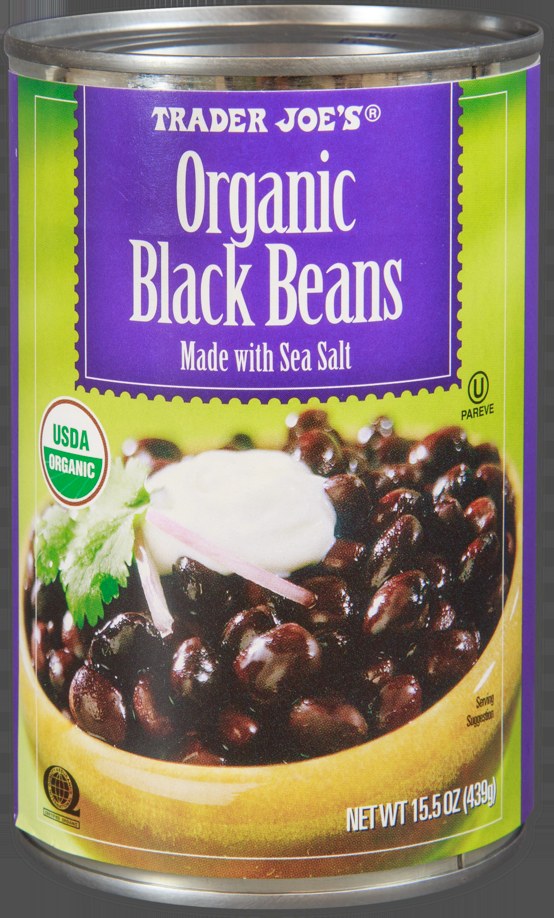
Trader Joe’s organic canned black beans are the workhorse for any Mexican-inspired weeknight meal — burrito bowls, tacos, chili, salads. The organic certification means non-GMO and lower sodium than most conventional cans. Keep four in the pantry and you can build a complete meal around them in 10 minutes.
Why It Earns a Spot
A half-cup of black beans delivers about 7 grams of protein and 7 grams of fiber for under 110 calories. The slow-digesting carbs and fiber are associated with stable blood sugar, and the resistant starch may also support gut health.
Best Ways to Eat It
- Burrito bowl: over brown rice with turkey, avocado, salsa.
- Quick chili: with ground turkey, cumin, and tomato.
- Black bean salad: with corn, jalapeno, lime, and cilantro.
Final Verdict
Keep four cans on hand. The pantry workhorse for plant-protein nights.
19. Organic Garbanzo Beans
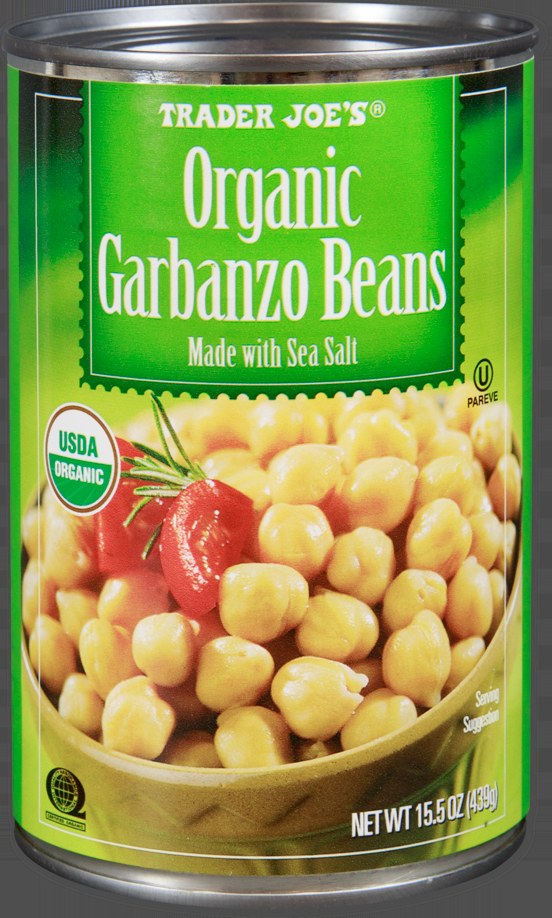
Canned garbanzo beans (chickpeas) are the unsung hero of the legume aisle — they roast into a crunchy snack, blend into hummus, top any salad, and disappear into curries. Trader Joe’s organic version is competitively priced. Drain, rinse, pat dry, and you’re ready for almost any recipe.
Why It Earns a Spot
Garbanzos run about 7 grams of protein and 6 grams of fiber per half-cup serving. Roasted, they turn into a crunchy snack that hits the satiety mark without the calorie hit of nuts. The combination of fiber and protein makes them one of the most filling pantry items.
Best Ways to Eat It
- Crispy roasted: drained, dried, tossed with olive oil and paprika, 425 for 25 minutes.
- Mediterranean salad: with cucumber, tomato, feta, lemon.
- Quick curry: simmered with ginger and a can of tomatoes.
Final Verdict
Roasted chickpeas are the best high-fiber snack in the pantry. Buy four cans.
20. Raw Almonds
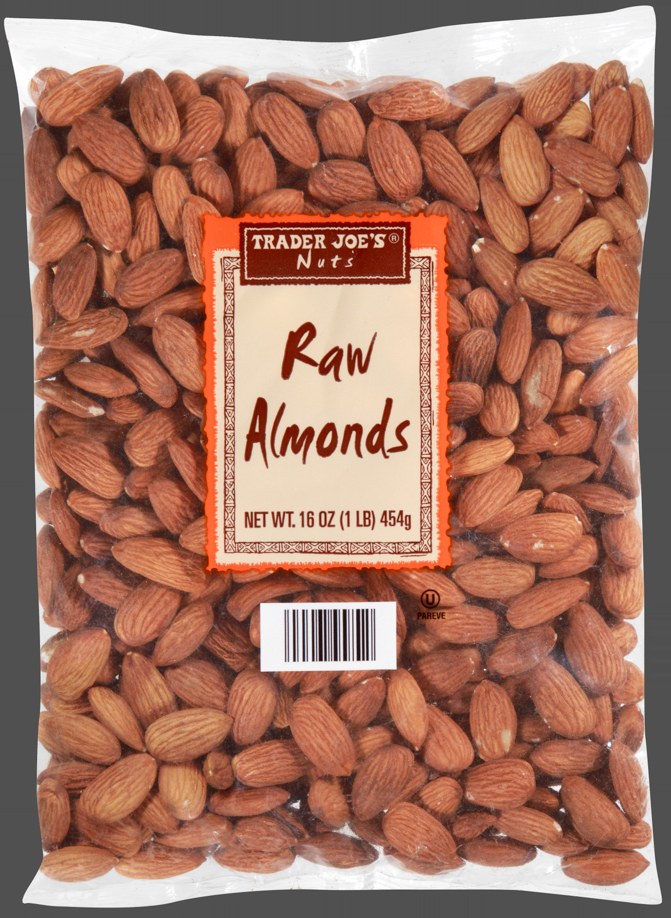
Raw whole almonds — not the roasted, salted, or chocolate-covered varieties — are the most satiating shelf-stable snack in the store. A 16-ounce bag runs about $5.99, which works out to roughly 30 cents per snack-size handful. Keep a small jar at your desk and one in the car.
Why It Earns a Spot
A 1-ounce serving of almonds (about 23 almonds) delivers 6 grams of protein and 3.5 grams of fiber for around 165 calories. The combination of healthy fats and protein makes almonds one of the most satiating snacks per serving — though portion control matters since the calories add up fast.
Best Ways to Eat It
- Yogurt topper: small handful over Greek yogurt with berries.
- Salad crunch: chopped over kale or spinach.
- Apple snack pair: 10 almonds + 1 apple = filling 250-calorie snack.
Final Verdict
Stick to a small portion (about a quarter cup). The snack that travels everywhere.
21. Organic Peeled Ginger
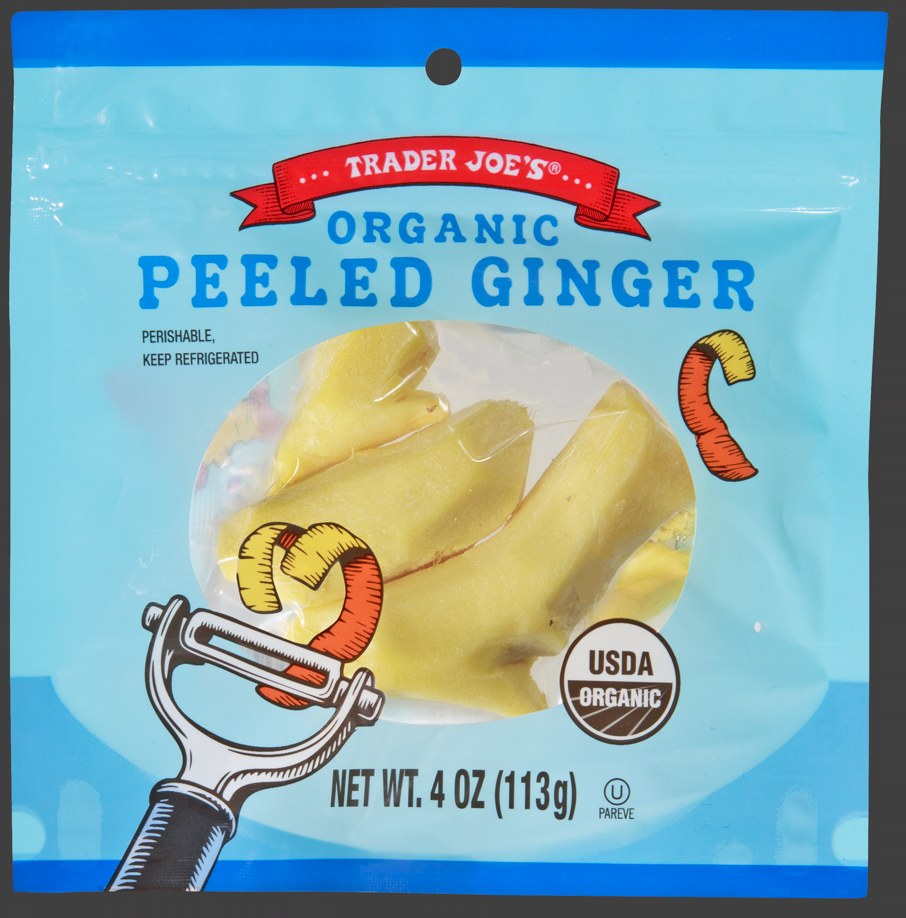
Trader Joe’s organic peeled ginger root sold in a jar saves the worst kitchen prep there is. No fibrous peel, no grating-your-knuckles, no waste — just clean ginger ready to grate or chop. It keeps about two weeks in the fridge after opening and lasts the same as a fresh knob without any of the hassle.
Why It Earns a Spot
Ginger contains compounds called gingerols that have been studied for thermogenic effects — meaning they may give a small temporary boost to calorie burning during digestion. Ginger is also one of the most-studied foods for digestive comfort. The pre-peeled jar saves the prep hassle.
Best Ways to Eat It
- Morning ginger tea: grated into hot water with lemon.
- Stir-fry base: minced with garlic to start any vegetable saute.
- Smoothie kick: small chunk blended into a yogurt-berry smoothie.
Final Verdict
A small jar lasts a month and shows up in everything from tea to dinner. Always stocked.
22. Matcha Green Tea
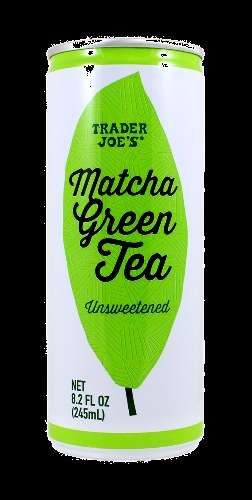
Trader Joe’s matcha green tea powder is reasonably priced compared to specialty tea shops, where the same tin can run $40 or more. It whisks smooth in hot water and delivers a sustained caffeine lift that doesn’t crash like coffee. The bright grassy flavor is acquired but worth the adjustment week.
Why It Earns a Spot
Matcha is whole-leaf green tea ground into a powder, meaning you drink the entire leaf rather than just steeping it. It delivers more of the catechin compounds (especially EGCG) that have been associated with modest metabolic effects in research. About 70 mg of caffeine per cup — gentler than coffee.
Best Ways to Eat It
- Morning matcha latte: 1 teaspoon whisked with hot water, finished with warm milk.
- Iced matcha: shaken cold with ice and a splash of unsweetened almond milk.
- Smoothie boost: half teaspoon blended into a yogurt-berry breakfast smoothie.
Final Verdict
A morning coffee swap worth trying. One tin lasts about a month.
23. Organic Sweet Potatoes
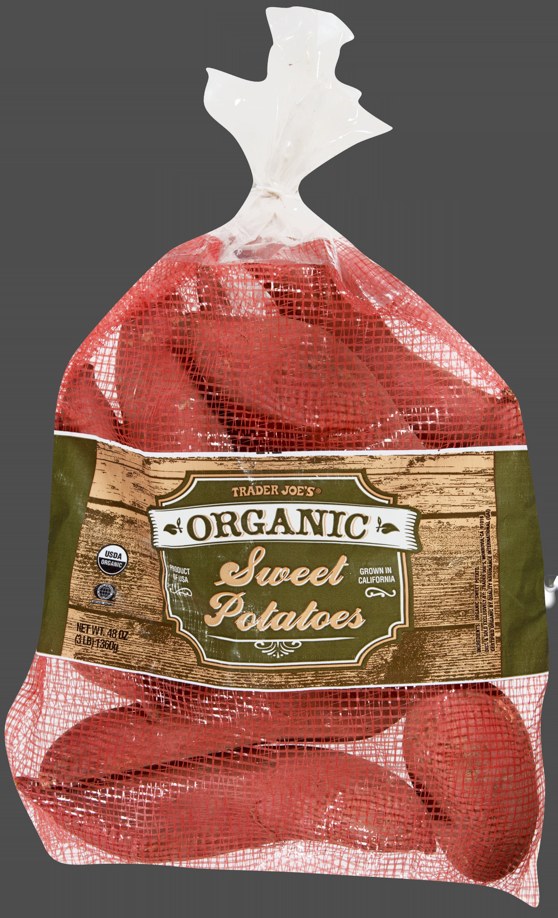
A bag of organic sweet potatoes runs about $4.49 and gives you four to five meals’ worth of starch. Baked whole at 400 for 45 minutes is the no-effort weeknight side. Cubed and roasted with olive oil and salt is the every-shop staple side dish — fancy enough for company, cheap enough for any week.
Why It Earns a Spot
A medium sweet potato delivers about 4 grams of fiber for around 100 calories, plus more beta-carotene than nearly any other vegetable. The slow-digesting carbs are associated with steadier energy than white potato or white rice, making them a smart starch for active days.
Best Ways to Eat It
- Baked whole: fork-pricked, baked at 400 for 45 minutes, topped with Greek yogurt and cinnamon.
- Sweet potato hash: diced, pan-crisped with ground turkey and spinach.
- Roasted side: cubed, tossed with olive oil and ginger, roasted at 425 for 25 minutes.
Final Verdict
Always in the produce drawer. Cheap, filling, and ready in 45 minutes.
How to Shop This List
If 23 items feels like a lot, here’s the simple version: pick one protein from the top of the list (chicken, salmon, or turkey), one tub of plain Greek yogurt, one bag of leafy greens, one bag of frozen berries (not on this list but always a smart add), one grain (oats or quinoa), and one snack (almonds or roasted chickpeas). That single cart will cover protein, fiber, and slow-digesting carbs for the entire week without anything processed.
The longer-term play is to rotate through the rest of the list over the next month. Swap white rice for quinoa one week. Try lentils as the protein twice. Replace cereal with rolled oats and Greek yogurt for breakfast. Each individual swap is small. Stacked over a month, the cumulative shift toward whole foods is what shows up on the scale and in how you feel.
Sign up for the Trader Joe’s Finds newsletter to see what’s new on shelves every week — the team highlights the seasonal whole-food rotations as they happen.